
Family-Managed Home Care in Ontario
Not sure how Family-Managed Home Care works? NtongoCARE offers private-pay support to cover what FMHC funding doesn't.
When your loved one's care needs go beyond their current care plan, the responsibility often falls on the family.
NtongoCARE provides private-pay, non-medical home care for Ontario families who need extra support at home, whether they're waiting for public services, navigating Ontario Health at Home, exploring Family-Managed Home Care, or simply helping a loved one stay safe and comfortable



Important FMHC Clarity
NtongoCARE provides private-pay, non-medical home care only.
- We do not approve, manage, or fund FMHC services. Family-Managed Home Care assessment, eligibility, approval, and care-plan decisions are made exclusively by Ontario Health at Home.
- Ontario Health atHome is responsible for FMHC assessment, eligibility, care planning, funding decisions, and program requirements.
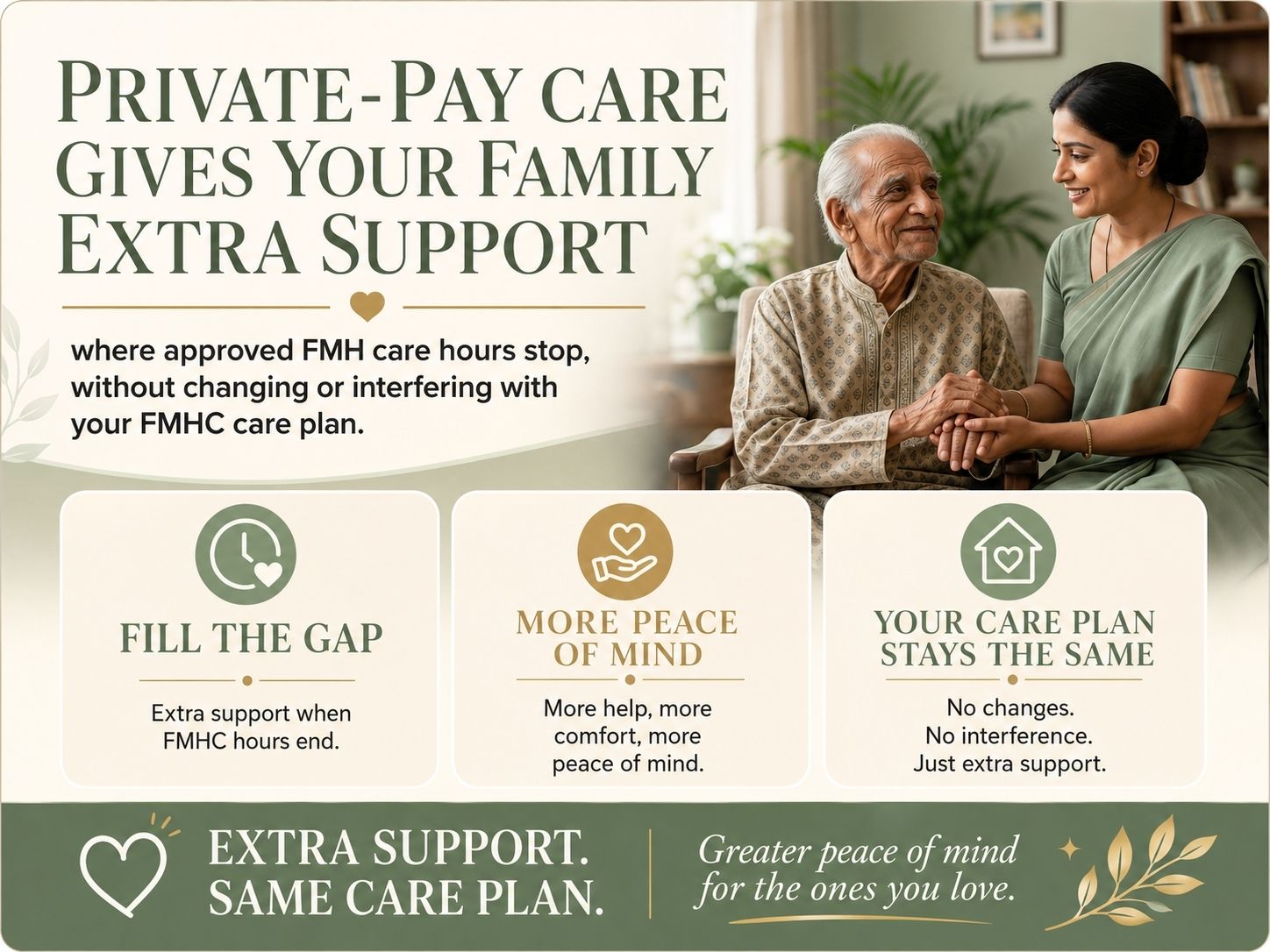
- Our role is different: we help families arrange private-pay support for the care gaps that may still exist before, after, between, or around publicly funded care (FMHC plan)
Start Your Family-Managed Home Care Journey
Ontario Health atHome is the official provider for FMHC eligibility, funding, and program approvals.
Family-Managed Home Care (FMHC) is a government-funded program administered by Ontario Health atHome. If you're interested in applying, confirming your eligibility, or learning more about funding and program requirements, your first step is to contact Ontario Health atHome or speak with your assigned care coordinator. NtongoCARE is happy to provide private-pay home care services to help fill care gaps, but all FMHC assessments, approvals, funding decisions, care plans, and reporting are managed by Ontario Health atHome.
The Question Every Family Eventually Asks
Public care can help. Family-Managed Home Care can give eligible families more control. But even with support in place, many families still ask the same hard question:
What happens during the hours no one is there?
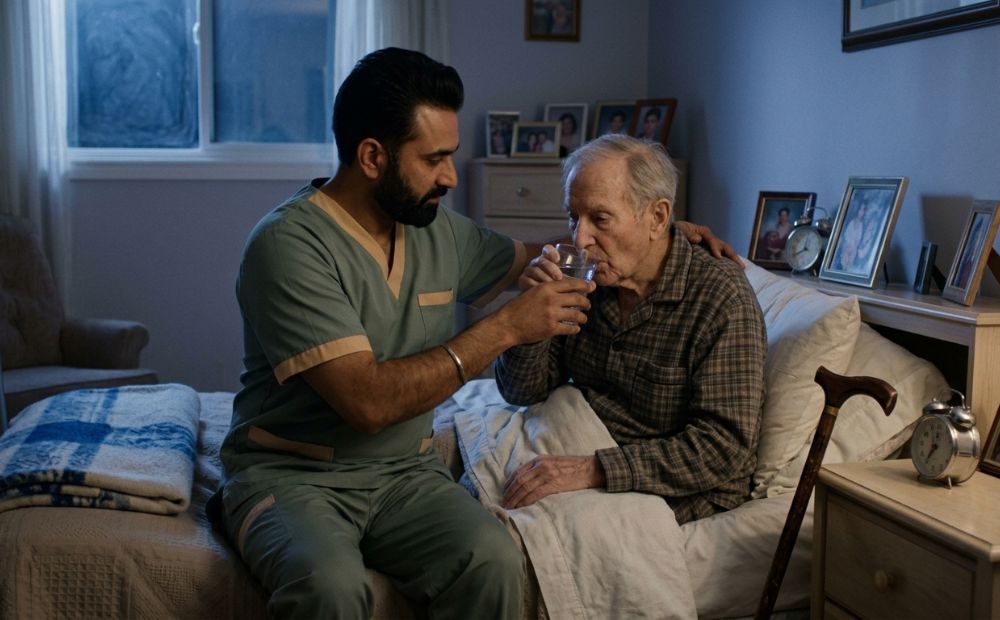
That is where stress builds. A loved one wakes at night. A parent forgets meals or hydration. A family caregiver is exhausted after weeks of being “on” every hour. Someone is coming home from hospital, but the home routine is not ready. NtongoCARE helps families plan private-pay support around those gaps, so loved ones can stay safer, more comfortable, and more supported at home.
Family-Managed Home Care, in plain language
- Family-Managed Home Care, often called FMHC, is an Ontario home care option for eligible patients or substitute decision-makers who want more flexibility in how approved home care services are arranged.
- When a person is approved, the family or substitute decision-maker may be able to choose providers, organize schedules, and manage care responsibilities within the care plan developed through Ontario Health atHome.
- In plain language: FMHC can provide more choice, but it also comes with responsibility. Families may need to understand approved hours, scheduling, documentation, reporting, provider coordination, and how the care plan is expected to work.
- Ontario Health at Home decides eligibility and care-plan approval. NtongoCARE does not determine eligibility, promise approval, or manage public funding.
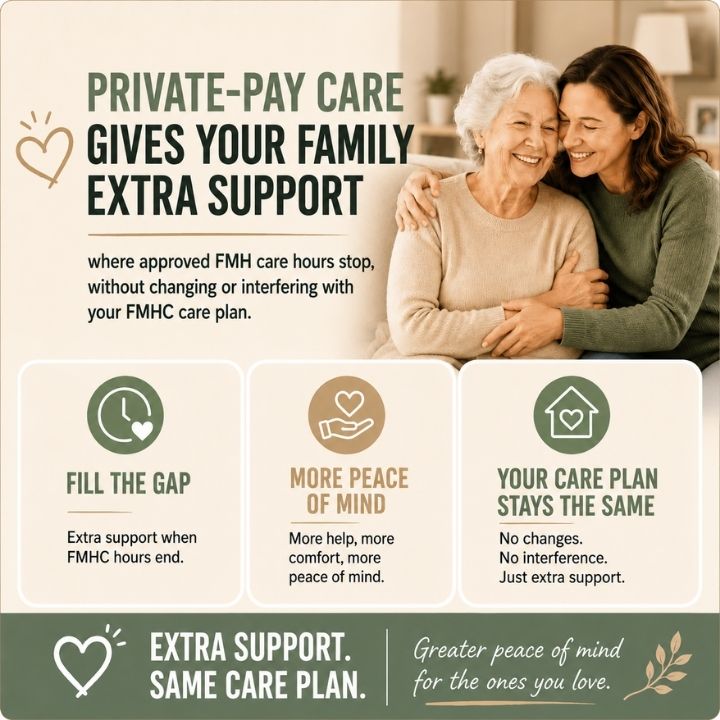
Where families often get stuck
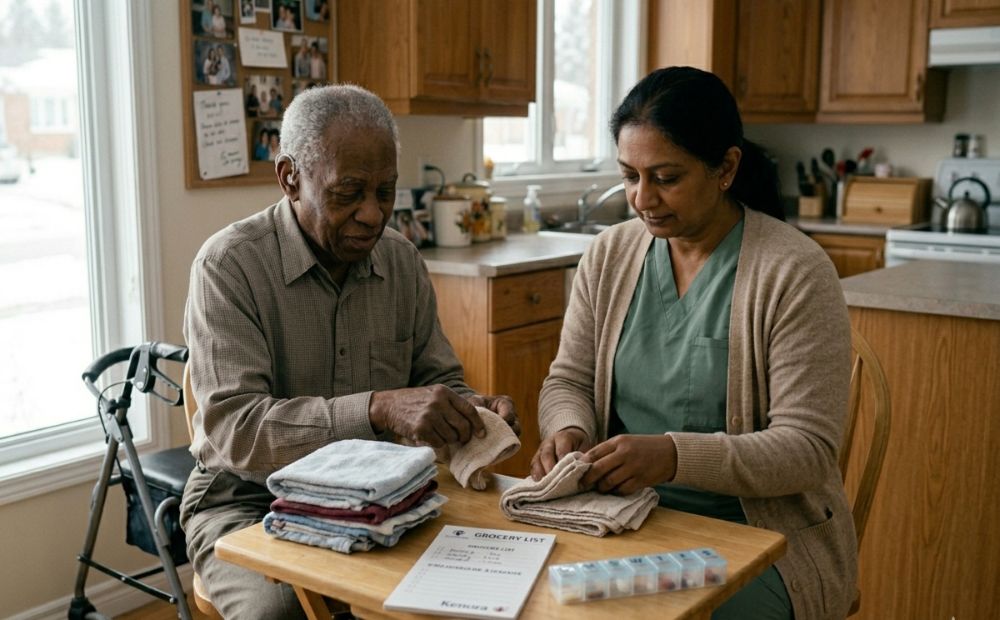
Even when support is approved, family life does not always fit inside approved hours. Families often need help with the gaps that remain before, after, between, or around publicly funded support.
Overnight worry
Caregiver burnout
Daily routines slipping
Hospital-to-home pressure
Supervision gaps
Cultural and routine fit
Private-pay support can help with!
Overnight & 24-Hour Care
Dementia & Cognitive Support
Hospital-to-Home Support
Caregiver Relief & Respite Care
Companionship & Supervision
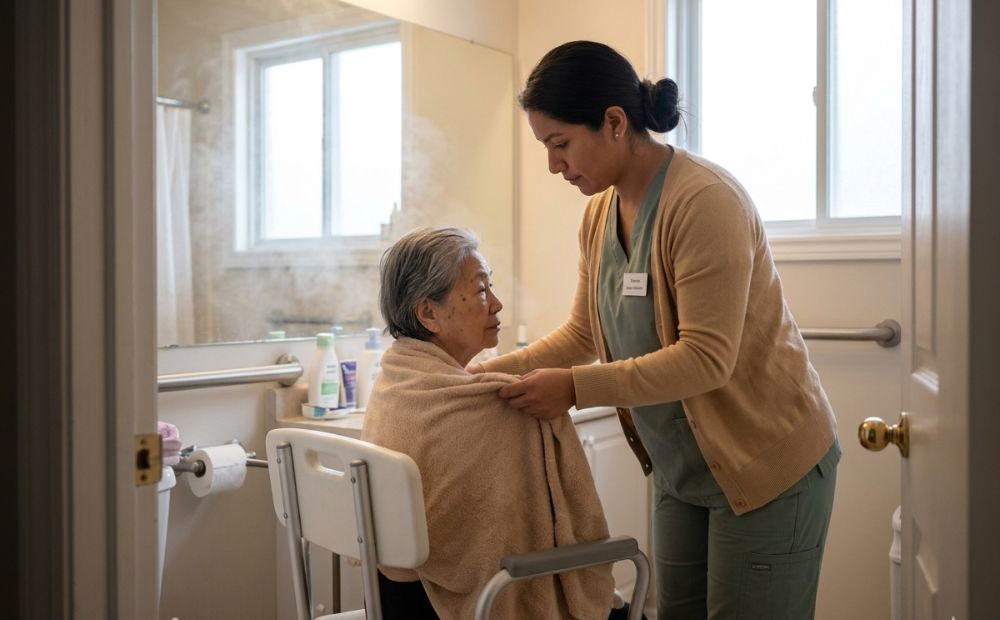
Home & Daily Living Support
Who Is Eligible for Private-Pay Support
- When Your loved one is waiting for publicly funded care to begin
- Your family already receives some public home care, but the hours are not enough
- Your loved one needs overnight or 24-hour safety support.
- A family caregiver is exhausted and needs relief
- Your loved one is coming home from hospital
- Your family needs culturally respectful care
- Your loved one needs companionship, supervision, or routine support
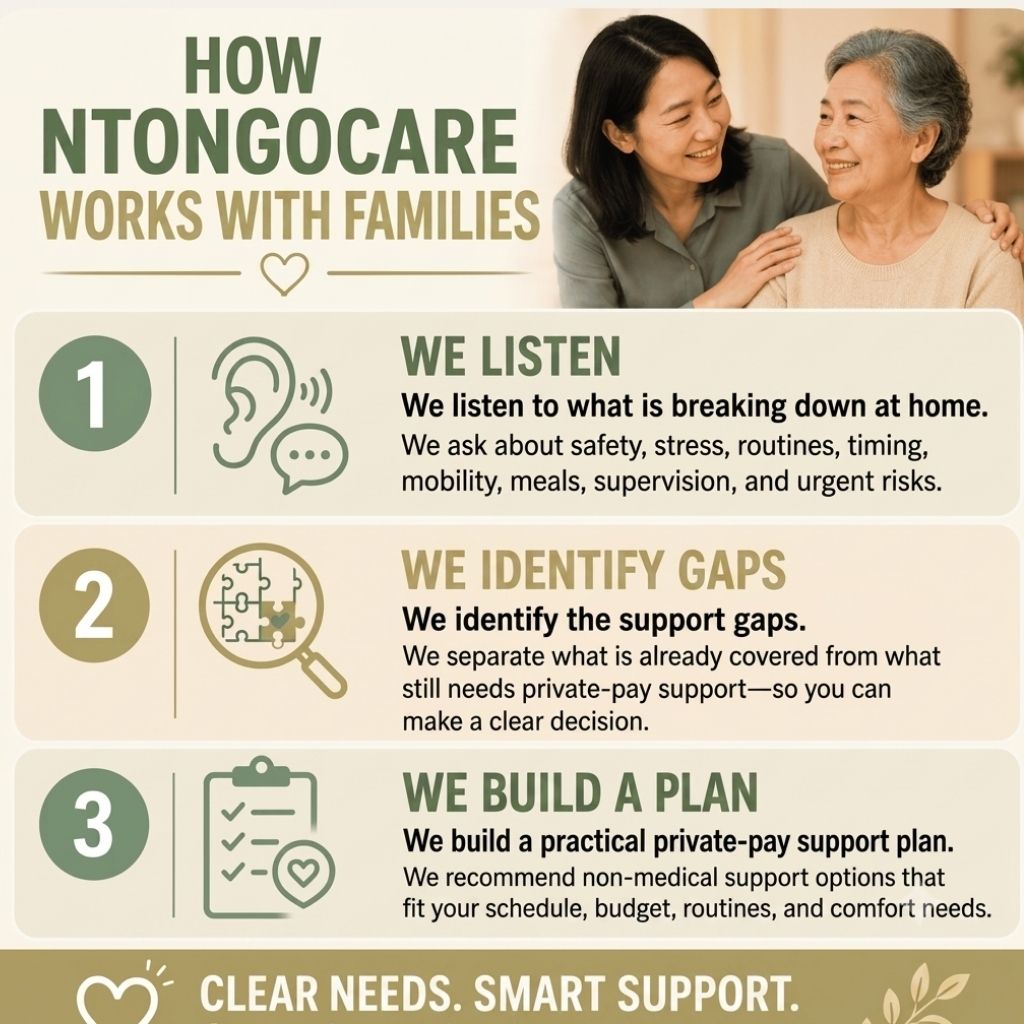
Ready to Begin?
Need help filling care gaps at home
Book a free NtongoCARE consultation. We will help you understand your private-pay options and plan support around your family’s real needs, whether you are waiting for assessment, already receiving public care, or simply trying to keep your loved one safer and more comfortable at home.